

Queering Desire
Human beings seem to be creatures in whom consciousness is tortuously entangled with animal instinct. In western culture, there can never be a purely physical or anxiety-free sexual encounter. Every attraction, every pattern of touch, every orgasm is shaped by psychic shadows.
Where sexuality touches the basis of being, does it not bring up unexpected contradictions, surprising moments, peculiar feelings? Are we not all at times rather confused concerning sexuality - where it is coming from, what it wants, where it has gone?
To straighten all this out would be to miss it. Sexuality is the unexpected. Through it, consciousness drops into deeper bodily and more mysterious grounds.
Sometimes it has to do with chemistry and physics, a physical sensation of tension seeking release, or an unspeakably wonderful, possibly shocking, sometimes sudden rearrangement of all your molecules. It can pull back in cool refrain, or erupt as the raw impulse to touch, stroke, grab, squeeze, press, caress - the soul in its most tactile form, urgently wanting, and wanting body.
So long as we feel sensitive about hungry mouths, anus, clitoris, penis, about bowels and masturbation, they will not appear as overwhelming powers. When we are in touch with them, we will also be in touch with a sense of inferiority. Where there is primal sexuality, there is at the same time inhibiting humility.
The archetypal psychologist James Hillman, in his groundbreaking book The Myth of Analysis, envisions Eros as a double movement: the hot, burning drive that searches for something to join with, the fire that wants to consume, has a counter pull that holds us back from the madness of love with fleeting signals of caution: fear, shame, doubt, or guilty conscience. Between the compelling object that sparked your fascination over there, and the stopping inhibition over here, a space opens up. This gap is the pause that makes soul. It is in this meeting place between yourself and the other that creative life and love happens.
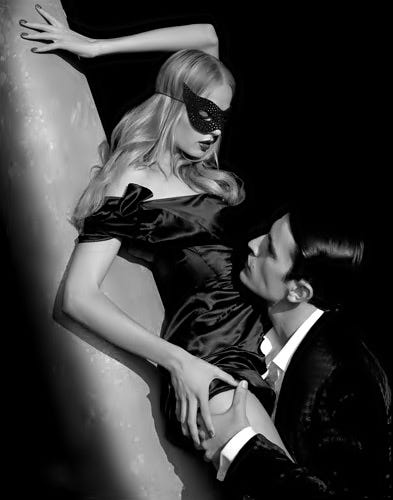
When we are able to hold the erotic tension, it draws in the wisdom of soul, that dark flux of polymorphic consciousness we call psyche. Unlike identity, with its never-ending pressure toward reconstituting legibility, legitimacy and belonging, psyche resists meaning-making, resolution, and therefore structures of power. Restless, disruptive, and libidinal, not only genital, the unconscious fantasy and desires of psyche are threaded through with the haunting excesses of meaning a person cannot bear. These agitate, like thorns under the skin, disorganising identity toward its ongoing mobility. They persist with an erotic pressure, an intensity, a non-soothing pleasure, pushing a subject toward excitation. As such, the creative drive cannot be collapsed into instinct— that is, biologically pre-programmed impulses oriented toward survival, reproduction, and self-regulation. Instinct ‘knows’ what it wants, while creativity emerges when instinct is frustrated, destabilised, fragmenting to release the anarchic imagination of soul moving in our flesh. In that Eros sparks this process, desire is always fugitive.
”All human love is a dramatic enactment of the wild and reckless, unquenchable, untrainable love that powers the universe” [Jeanette Winterson, The Powerbook]
Subscribe to view a four-part series of Audiovisual Performance Lectures that explore Desire — its capture and incursions; its split, pathologising forms; its exigent sadism and dark demands — recovering it as the sacred love of soul. Ovid’s Hermaphroditus and Apuleius’ tale of Psykhe and Eros are the informing myths, not only for analysis as James Hillman insists, but for remembering the androgynous consciousness of desire essential for our times.
Act I: A Heresy of Desire
Love is a madness; a mania that sets off an explosion of fantasies and feelings that can be as confusing as they are brutal and ecstatic. Our problem is that we literalise this instinct that fascinates, even as it shocks: we either sexualise its excesses or distance ourselves from its inferiorities through aggression or repression. Disgust and shame are never far away.
The result is desire has been highly sublimated into a defensive morality that kills or medicates the dark beasts in the corners of our psyche (and in the world around us), deeming their contribution to creative life unacceptable, too much, too unpredictable. Who hasn’t tried to hide the violent gestures, the cruel or obscene desires that disrupt the sweet folds of human sexuality and love?
Swallowed into the Oedipal conflict, a misogynist dogma of othering fixes Desire into the heteronormative straightjacket of gender: the feminine reduced to an hysterical madwoman or witch, and the masculine elevated to the sterile ideal of white supremacy. Split and quartered, dark eros is further folded into racist power mongering and capitalist production, bridled by the heroic will of control and progress above all else. Seduced, we quickly became precious, precocious, whitewashed, bloodless - not connected by any kind of divine eros.
Eroticism is not a family drama. It is not rendered intelligible by gender or power. The flame of Eros, the creative spirit we are talking about, breaks us open to find psyche. The enigmatic forces (with their sexual demands) catch us in distorted mirrors to shear us of a well rehearsed innocence and corrupt our easy collective hopes and expectations of looking good or safely belonging. We do not make these perverted images up.
This audiovisual incursion rebels against the heretical narrative that captures desire to remind us that we have a choice, the original meaning of the word heresy, to go beyond rupture as a trauma event. With a more subversive curiosity, it suggests love leads us into dark cracks to find a genuine encounter with soul. Not as something we own — as the experience of rapture that takes us beyond ourselves, into the between, to meet the living psyche moving there.
“The purpose of tyranny,” writes the Chinese poet Liao Yiwu, who was long incarcerated and censured, “is to turn us into a group of angry lunatics— invalids dominated by our emotions.”
Act II: Imaginal Incest
The double nature of Eros sets off emotional irruptions that lock compulsion and inhibition together in a tandem which are in excess of the genres of meaning and moral policing that shape us. They are impossible relations, not fixed within the known, not available for scrutiny, without geometry or moral re/solution, yet they exert pressure. Love and death, innocence and cruelty, taboo and transgression.
As the poet Rumi describes : Seawater begs the pearl to break its shell.
Where we are unable to meet the emotion of these tight tangos, the fantasy images become split from instinct in a schizoid polarity. Desire remains literalised on the object. We either rush towards in frenzied fascination, the impulse to connect briefly enjoyed as a pleasure fix, with years of mundane consequences. Sex contorts into clinging servility or an obsessive way to feel alive. Or we rush away, shutting down to stay safe and escape the entwining capture. Either way, the space between, the divine opening for entry of the eternal soul, is lost.
An elaborate system of diagnostic categories medicalise these disassociated conditions into narratives of disease and mental health disorders, many of which carry the stamp of perversion. Called various paraphilias, where para means ‘beyond or adjacent to’, and philia, ‘the love shared between friends, tender affection’, a paraphilia can be understood as a condition of being ‘beyond a shared involvement’.

Act II explores the nature of this erotic entanglement and the consequences of it being broken apart, to offer a practice for initiating us into soul, called imaginal incest. Resisting the monomania of desire, and holding Eros in your heart, you penetrate the neglected and condemned parts of yourself hiding there, until the images dismember, allowing the flux of agitations, sensual details, perverse conflicts, and vulnerable intimacies, to sophisticate the hysteria of our anima fantasies into psychic imagination.
When we realise Psyche within the inversions, diversions, and perversions that the instinct of love involves us in, we avoid the actual oppression and abuse of others. Fostering imagination, we enter the wilds of soul-making, which is also a way of love-making. In the imaginal encounter, love becomes a creative act for tending the perverse images of soul; an enigmatic guide to weird fidelities and ethical relations in love, work, sexuality, and life.
As James Hillman clarifies: ”All our human struggle with imagination and its mad incursions, with symptoms and their complexes, with ideologies, theologies, and their systems, are in root and essence the unpredictable writhing movements of Psyche freeing herself from human imprisonment.”
Act III: Queering Consciousness: Hermaphroditus
This ACT steps into the middling ground of the transference field to reclaim what has been thrust aside by the reproaches of a misogynist conscience. What is called freak, abject, abnormal, becomes a site for queering the neurotypical consciousness of our culture.
When Pan bursts upon a scene, his generativity is precisely because he is untamed, feral, uncivilised, driven by a necessity that is non-subjective. Pan chases nymphs to bring those enigmatic messages of soul into body and move us toward our destiny.
Exploring the first marriage of body and soul instigated by Pan-Eros, Ovid’s tale of Salmakis and Hermaphroditus offers a style for imagining before opposites that rejoins what is split from below; weaving like a wound a heals. Caught in the game of longing and rejection we know so well, Hermaphroditus is transformed against his will, as we all are when the gods arrive. The rupture of love breaks suddenly and completely into life to change the basis of being.
His metamorphosis invokes Dionysus as the ‘Loosener’ and god of epiphanic dismemberment who dissolves consciousness into the feeling waters of the uninterpreted and unrefined. Sparked by love, and brooding in this twilight state on what is alien and opaque within, lingering intensities disturb, shadow conflicts ache, disobedient kinks and quirks that want to surface offer anOther comprehension. With a kind of autistic attunement, they become imaginal teachers, errant tricksters and holy sadists, invigorating an erotic tango with the forces of change. Bringing a non-gendered creativity that is psychic, multiple, fluid, and full of contradiction, soul moving in body makes beauty.
In this sense, “the earth, darkness, the abysmal side of bodily man with animal passions and instinctual nature” becomes “an erotic compulsion toward soul-making” (James Hillman, Myth of Analysis, 294).
Act IV: Queering Love: The Myth of Psykhe and Eros
Staying present with the imagining body as it receives the impact of beauty, or those uncanny or synchronistic events that awaken us to the more-than-human worlds, or the shock of panic, illness or crisis, is rooted in our sensitivity to vibration and the creative instinct of Love.
When we attune with love and relatedness to the between, the forces so much bigger than us, playing through our lives, offer their intelligence and possibilities to our pains and tensions. The living world opens up as numinous, nuanced, generative. Even our psychopathologies become a revelation, a gnosis. It is love that has come to matter. As ethical action.
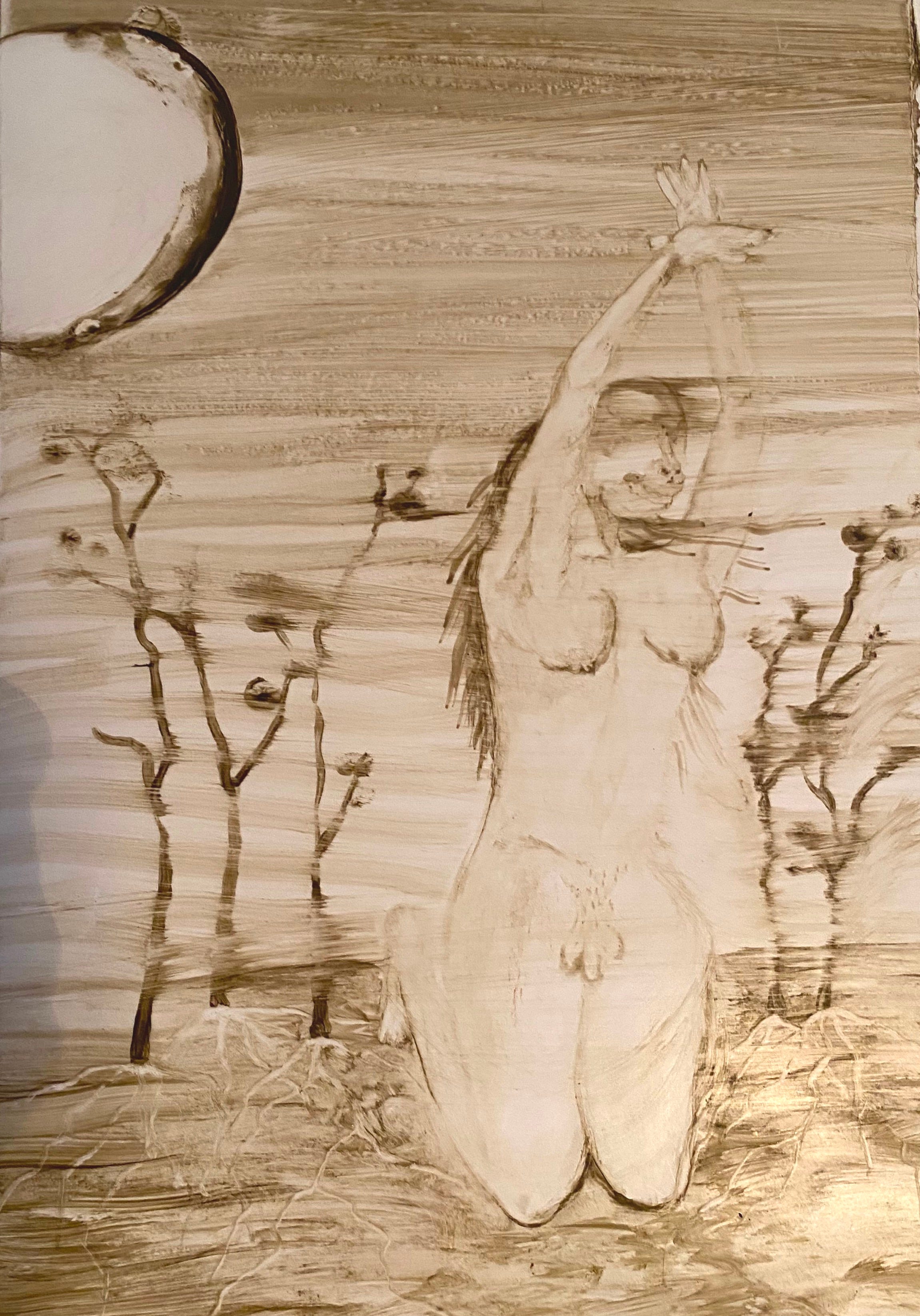
Following James Hillman’s revisioning of the ancient tale of Psykhe & Eros, this final Act describes the fermentation of desire that transforms love and awakens psyche. It tracks the shifts in masculine and feminine consciousness necessary for the second marriage of spirit and soul. Rather than the up-down flight and archetypal inflation of the phallus as root metaphor for a creative and erotic consciousness that makes world, they both learn to vessel, gestate, penetrate from within. Practicing an ecology of attention they encounter the imaginal core of desire. Eros because he finds soul, overcomes compulsion. And Psyche, because she gives body to the lost Wisdom of Ntu, offers her luminous underworld beauty to life. World-making becomes abundant again under a moving feast of stars.
Perhaps as Thomas Moore suggests: lovers who learn to embody both male and female practices in their lovemaking “ would be less polarised: more feminine sensuality in the male, more masculine phallicism in the female,” [Dark Eros, 61].