

Encountering
Originally, encounter meant a meeting of adversaries — from Old French encontrer, based on Latin in (“in”) + contra (“against”). An unexpected clash. A confrontation.
Today, the word is softened to mean meeting difficulties or contending with problems. Yet something wilder persists in it.
To encounter a god is to catch fire. Bodies shake, fall, run, laugh, cry. Desire explodes. Identity loosens. In these moments desire, beauty, and rupture intersect, and transformation becomes possible, if we can ride the intensity without being shattered by it.
Yet, desire is so tied up with power, compulsion, capitalist production, and gender, we have lost our way to respond to its creative and iconoclastic spark.
‘The Erotics of Encounter is an emerging body of ritual and improvisation practices for reweaving relations in a fractured and emergent world.
Collaborating with chance and entanglement, we cultivate the capacity to meet the erotic force of Ntu, the all pervading spirit of love. Enchanting us in whatever way it can, it leads us in to the imaginal ground of the between, calling in the ethics of soul.
Concept
We are all familiar with the concept of Ubuntu, a Nguni word that translates as “I am because we are” (a person is a person because of others) as a relational philosophy of personhood. Zimbabwean Rutendo Ngara (1997) traces the word’s etymology through the suffix ‘Ntu’, which is a reference to the all-pervading force of Life itself, Nature, Natura or Spirit.
Ngara reminds us that the commonly held concept of Ubuntu extends beyond the human to include four aspects of Ntu as ontologically described in Proto-Bantu linguistic use. They are: 1) Mu-Ntu or Aba-Ntu - reasoned beings - living, dead or unborn as well as more-than-human deities and also trees because they link the living to the ancestors; 2) Ki-Ntu - unreasoned beings - plants, animals, minerals and objects of use that are acted upon; 3) Ha-Ntu or space and time as a locational relation; 4) Ku-Ntu - an abstract feeling or modality such as beauty, terror, joy.
The four aspects of Ntu provoke a relationality across time, space, human and more-than-human, the living and the dead. In this way, temporal multiplicities are made present: the ancestors and the unborn are linked with the living in an interdependent, interrelated ecology of forces, all of whom are re-presented in the present. For Ngara, this complexly interwoven way of knowing becomes also a way of healing.
We can view Ntu as what binds and connects us; an animating principle that sparks the between, like Eros. Our ancestors are called in to the space to participate in the work. Other beings that exist in the realm of Kintu, Hantu, Bintu and Kuntu are also invoked, recalled and restored to their relational space. And we humans must dismantle the propertied capitalist logics of self-possession to allow for Ntu, spirit-possession. Just as the body is remembered as a site for all its relations, spacetime environment is also a networked interconnection, where radical relationality proposes a reciprocal kinship that carries filial obligations. Following this, a confrontation with the traumata of colonial violence on the body is also a confrontation of the traumata of the Land and vice versa. Affect flows through all.
This way of thinking about materiality challenges modern, colonial, and capitalist worldviews, particularly Max Weber’s disenchantment of modernity. Harry Garuba’s vital New Materialism - that is best expressed as ‘Continual Re-enchantment of the World’ — urges a cultivation of relational ethics that cuts across the cleaves and divides of race, Global North and South, Human and More-than-human, animate and inanimate, self and other, seeking the Ntu that becomes visible in the encounter between.
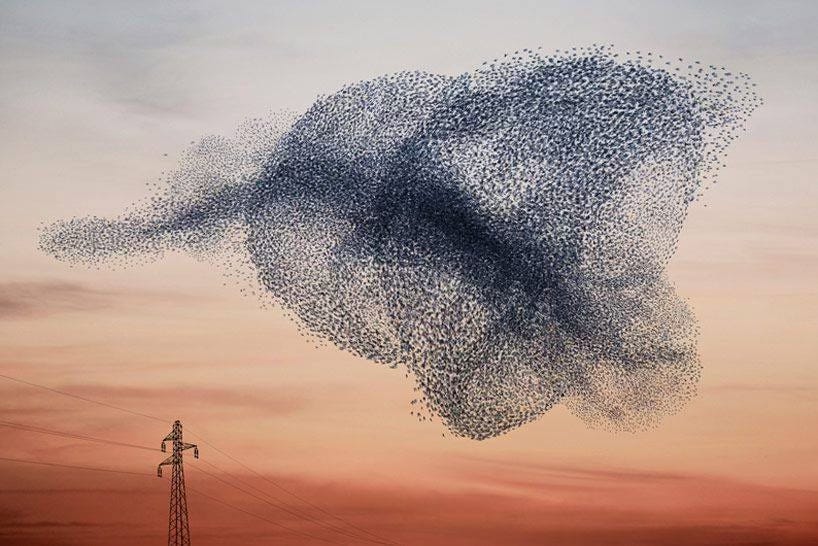
Sound also cuts across, reverberating and resonating through matter. It is impossible to shut out sound or turn away from it — it continues to move affectively through bodies, space time. Like a convergence of keening birds, sound can move as a screaming, sobbing, sighing, singing with the vibrant world. Concrete can spasm and splutter; rivers weep and rage. Through us, for us, with us.
It is at the nexus of these ideas that our collaboration comes to matter.
Practice
Taking therapy out of the one-on-one, we engage in research collaborations, workshops, rituals, and co-creations, to unfold private and political pain within the relational context of land, community, and social currents.
Our first foray was Walking Wild, where we opened to being touched by the raw beauty of landscapes and its many voices. The heart of the matter was to find the courage for immediate intimacy, and not merely with ourselves, but with the particular faces of the sensate world with which our heart is in rapport.
Last year, we entered Bewilderness — those erotic zones where identity unravels and certainty dissolves. We listened for patterns, pressures, hidden tensions, and emergent dynamics shaping involvement. Always messy, vulnerable-making, provocative, emotion as ‘divine influx’ involves us with the prickly aliveness of world that emerges through cracks.
Cracks, Dr. Báyò Akómoláfé suggests, are where what we owe returns to interrogate the form we’ve assembled. What had to be repressed, excluded, or abandoned in order to perform coherence and moral legibility leaks back as the wound that will not heal, the grief that won’t resolve, the exhaustion of compulsory growth. These excesses remind us that bodies are never fully available to the colonial project of optimisation. Every itch, stammer, ache, yearning, or smell signals debts we carry to more-than-human intelligences moving in the field.
Like ants clearing trauma paths, we learned to stay with the trouble, critically tearing open the scaffolding of habit to expose rough truths and queer the only natural. Working with voice, singing, movement, and improvisation, we slipped with emotion between the fixed lines drawn around what counts as natural, normal, or knowable. We cross-hatched, moved sideways, cut through, troubled borders, bent and re-configured, and discovered unexpected alliances. A tangle of leaks and frictions, shimmering with otherworldly life, revealed a wild relationality running beneath the surface of things.
Identity, desire, and habit are reworked by encounter.
This year, Resonance Circles continue this exploration of the ethics and erotics of encounter. These gatherings are an invitation to tend the cracks of the crisis together. A call to cultivate body as a resonant relational field and practice world-making as decoloniality.
Resonance holds this fertile edge. Attuning to unforeseen energies at play, we follow imp-pulses—a duende, daimon, a caprice at work— into rhythmic cracks, tremors, slippages, and leakages. As both act-or and act-ed upon, initiator and receiver, we lean into the generosity of uncertainty to find rhythm together.
Giving voice, movement, gesture to the shape-shifting imagination of psyche moving between, patterns of relations emerge. Like a schooling of fish, a convergence occurs where synchronicity, reciprocity, and complexity coalesce, without erasing difference.
Each of us perceives differently. Each carries blind spots. Each holds fragments the others cannot. When one breaks forward with some new echo, others hold resonance, sustaining relation. Resonance thus emerges slowly, incompletely, always fugitive, non-linear, non-verbal, polysexual — like psyche itself.
World becomes abundant again, under a moving feast of stars.
We gather on Sundays closest to the First Quarter Moon, from 8-10am.
Our first meeting is next week, on 25 January.
First-quarter moons are when we feel weird fidelity with the not fully formed. The moon is mostly both, always trans: waxing and waning, flirting with fullness or emptiness for a brief, tenuous moment before slipping into change.
Moving through the year, our ritual practices will reflect each lunation as a threshold for shared and collective sensing of what is emerging between light and dark, new and full.
Subscribe to receive the full details of place, dates for the rest of the year, and mythic and astronomical resonances for the growing Dassie moon.
Join us.
Perfomance
In living art incursions, imp-provisers turn their sentient heart towards the raw, abject intensities that roam in every encounter, to track with emotion as the most alert form of attention. Affect is vibration — it creates sensation, rhythm, micro-movements, textural shifts, peripheral or background relations, gesture, posture, pacing, repetition.
Perception of it is not something a subject has. Rather it is a form of body cognition co-composed in the relational field as world-in-the-making. Situated, sensory, it is a way of responding to intensity and composing relations before words, with an animal discrimination. Knowing while moving, perceiving while acting, thinking without abstracting outside the moment to narrate itself; reflex and reflection together. This ecology of attention and attunement forms the basis of improvisation performance.
Subverting narrative and solo virtuoso, improvisors meet on the horizontal plane of the anarchic imagination, always unknowable, to collaborate with chance. Polyvocal choreographies emerge as complexity and synchronicity converge in an unpredictable rain of sound, gestures, and weird fidelities. No beginnings or ends; no hierarchy, closure, measure, or mastery. Rather sensory harmonics are coaxed from dissonance, revealing that opposites are not transcended but rejoin from below, weaving as a wound heals.
Rituals of encounter become a communism of soul-making — a shared labor of reweaving relation with Ntu in a fractured world. Recalled to the middling ground - the numinous betwixt and betweenness that defeats separation, corrodes boundary, spills through marked territory, and crosses out each confident line - we re-member human love as the basis of consciousness, restoring our instinctual intelligence and response-ability amidst ecological demise.
Love as ethical action guides our creative practice.
Is this imp-plausible?